Episodes

Jun 6, 2025
Jun 6, 2025
58 min
Keywords: mergers, acquisitions, management consulting, technology, startups, venture capital, incubators, sports management, entrepreneurship, COVID-19, broadcast technology, mergers and acquisitions, problem solving, AI in business, scalable business models, business integration, technology adoption, small business growth, operational efficiency, entrepreneurial strategies
Summary: In this episode, Charles Sims shares his extensive experience in management consulting, technology, and venture capital, focusing on mergers and acquisitions. He discusses his journey from working with small businesses to becoming the CTO of the LA Clippers and the United Talent Agency. Charles emphasizes the importance of technology in business operations and the role of effective communication in securing investments. He also highlights common mistakes startups make and the differences between angel investors and venture capitalists, especially in the context of the COVID-19 pandemic and its impact on the industry. In this conversation, Charles Sims discusses the evolution of broadcast technology, the importance of problem-solving approaches in chaotic situations, and the impact of AI on small businesses. He emphasizes the need for modular and scalable business models, the significance of navigating complexity in business systems, and the creative deal-making process in mergers and acquisitions. The discussion also highlights the advantages small businesses have in adapting quickly to changes and leveraging technology for operational efficiency.
Takeaways
Charles started in management consulting, focusing on operational and IT strategies.
He served as CTO for the LA Clippers, revolutionizing their technology.
At United Talent Agency, he developed a passion for mergers and acquisitions.
Charles launched Investimate, a platform for business planning and investment analysis.
He emphasizes the importance of a well-packaged narrative for startups.
Startups often fail by dumping too much information into their pitches.
Investors prioritize operators over ideas when making decisions.
Angels have more tolerance for failure compared to VCs.
COVID accelerated technological advancements in the industry.
Transparency with investors can lead to valuable support and connections. Broadcast technology has evolved significantly post-COVID.
The hurricane approach involves structured problem-solving in chaos.
Staying agnostic and modular in technology choices is crucial.
AI's growth is linked to the API ecosystem.
Small businesses can move quickly to capitalize on opportunities.
Creative deal-making is essential in mergers and acquisitions.
Scalability in business models is key to long-term success.
Avoid relying solely on people; focus on product scalability.
Utilizing existing blueprints can save time and effort.
Embrace technology to automate and streamline business processes.
Titles
Navigating Mergers and Acquisitions with Charles Sims
From Consulting to CTO: Charles Sims' Journey
The Intersection of Technology and Business Operations
Investing in Ideas: The Role of Operators
Building a Virtual Incubator for Startups
Sound Bites
"Every business is a software business."
"We can move very quickly from idea to MVP."
"Ideas are free."
"Your investors are there to help you."
"Don't hide, be transparent."
"COVID helped us launch our music side."
"We had to quickly build on top of it."
"Stay as agnostic and modular as you can."
"We could get you from zero to 60."
"Don't reinvent the wheel."
"You don't have to go to MBA school."
Chapters
00:00 Introduction to Charles Sims and M&A
03:03 Charles's Journey in Management Consulting
05:51 CTO Experience with LA Clippers
09:01 Transition to United Talent Agency
11:58 Launching Investimate and VC Insights
14:50 Building a Virtual Incubator
17:55 Common Mistakes of Startups
21:04 The Role of Angels vs. VCs
23:52 Impact of COVID on Business
27:08 Lessons from Acquiring the Forum
28:03 The Evolution of Broadcast Technology
34:24 The Hurricane Approach to Problem Solving
40:08 Navigating Complexity in Business Systems
46:04 The Impact of AI on Small Businesses
52:54 Creating Scalable Business Models
58:11 Engaging with Charles Sims

May 30, 2025
May 30, 2025
58 min
Keywords: entrepreneurship, retreats, wellness, health, business model, personal growth, corporate retreats, marketing, financial challenges, life lessons, entrepreneurship, financial awareness, hosting retreats, business advice, customer feedback, sustainable business, pricing strategies, marketing, retreat planning, small business
Summary: In this engaging conversation, Anna Vanagtmael shares her journey from a career in molecular diagnostics to becoming a successful retreat host. She discusses the challenges she faced, including health issues that prompted a career change, and how she discovered her passion for hosting retreats. Anna emphasizes the importance of personal growth, wellness, and creating a supportive community. She also delves into the business aspects of running retreats, including marketing, financial challenges, and the significance of research and planning in building a successful venture. In this conversation, Anna Vanagtmael shares her insights on the importance of financial awareness for entrepreneurs, the intricacies of hosting retreats, and the significance of customer feedback. She emphasizes that understanding numbers is crucial for making informed business decisions and highlights the need for entrepreneurs to plan and market their offerings effectively. Anna also discusses her journey in the retreat business, offering advice for aspiring entrepreneurs and the importance of being authentic in branding.
Takeaways
Anna transitioned from a career in molecular diagnostics to entrepreneurship.
Health challenges led Anna to reflect on her career satisfaction.
She discovered her passion for hosting retreats through yoga and meditation.
The first retreat experience taught her valuable lessons about logistics and flexibility.
Building a business model required careful planning and collaboration with friends.
Marketing was a significant challenge in growing her retreat business.
Anna emphasized the importance of creating a supportive community during retreats.
She navigated financial challenges by side hustling while building her brand.
Research and planning were crucial in establishing her retreat business.
Anna's retreats focus on personal growth and wellness, catering to diverse needs. People often neglect their financial calculations, leading to business failures.
Regularly monitoring financials can provide peace of mind and informed decision-making.
It's essential to create a sustainable business rather than an expensive hobby.
Planning and marketing a retreat requires significant lead time and effort.
Providing value doesn't mean overloading guests with activities; downtime is crucial.
Authenticity in branding attracts the right clients and enhances business relationships.
Feedback from customers is invaluable for improving services and offerings.
Successful entrepreneurs are willing to do what others avoid, like understanding their numbers.
Knowing your ideal customer profile is key to effective marketing and service delivery.
Building relationships with local contractors is essential for future business expansion.
Titles
From Lab to Retreats: Anna's Entrepreneurial Journey
Finding Purpose: The Accidental Entrepreneur
Health, Wellness, and the Birth of Retreats
Building a Business: Lessons from the Retreat Industry
Navigating Challenges: Anna's Path to Success
Sound Bites
"I was so bored."
"Life is short. I only get one shot."
"I wanted something a little more elevated."
"I just thought we paid a lot for the quality of it."
"I wanted to be able to manage all of that."
"I didn't really want to go backwards."
"I made money on all but one in profit."
"People don't look at it to make educated decisions"
"It's not rocket science, you could find a bookkeeper"
"Don't throw everything but the kitchen sink at it"
"It's a huge disservice to yourself not to ask for feedback"
Chapters
00:00 Introduction to Anna's Journey
04:20 From Science to Entrepreneurship
08:10 Health Challenges and Career Reflection
12:54 The Birth of Retreats
18:38 First Retreat Experience
22:30 Building a Business Model
24:20 Navigating Financial Challenges
27:00 Research and Planning for Success
29:24 Understanding Financial Awareness in Entrepreneurship
37:06 The Business of Hosting Retreats
42:13 Advice for Aspiring Entrepreneurs
49:52 The Importance of Customer Feedback

May 23, 2025
May 23, 2025
45 min
Keywords: digital marketing, book writing, small business, marketing mistakes, SEO, content creation, entrepreneurship, marketing strategies, business development, online presence, self-publishing, children's books, marketing, writing, podcasting, Italian culture, pizza, entrepreneurship, book promotion, storytelling
Summary: In this episode, Mitch Beinhaker interviews Erica D'Arcangelo, a seasoned digital marketer with over 20 years of experience. They discuss the evolution of digital marketing, common mistakes made by small business owners, and the importance of consistency in marketing efforts. Erica shares her journey from working in healthcare marketing to running three successful agencies and highlights the challenges faced by entrepreneurs. Additionally, they delve into Erica's book, 'A Story About Pizza,' which reflects on her family's history and the impact of marketing on small businesses. In this conversation, Erica D'Arcangelo shares her journey from marketing professional to self-published author, discussing the challenges and successes of her first book and her new children's book series. She emphasizes the importance of marketing in the publishing process and the role of storytelling in connecting with audiences. Erica also introduces her podcast, 'Pizza Story Podcast,' where she explores Italian culture and the stories behind family-owned pizzerias.
Takeaways
Digital marketing is crucial for sales and business development.
Erica has over 20 years of experience in digital marketing.
The evolution of technology has changed marketing strategies.
Small business owners often underestimate the effort required for success.
Common marketing mistakes include outdated websites and poor SEO practices.
Consistency in marketing is key to achieving results.
Content creation should be relevant and regular to engage audiences.
Building trust with clients is essential for successful marketing.
Erica's book reflects her family's history and the importance of storytelling.
Marketing requires ongoing maintenance and adaptation to changes. Erica self-published her first book after 20 years in marketing.
Her book became a bestseller in the Italian history category.
She is now working on a 12-book children's series about pizza.
The first book in the series is titled 'P.H.O. Pizza.'
Erica's podcast features interviews with family-owned pizzerias.
Marketing a book requires a plan established well before publication.
Outlining and storyboarding are crucial for writing a book.
AI can assist in the writing process by providing structure.
Writing a book takes time and dedication.
Establishing an online presence is key for authors.
Titles
Mastering Digital Marketing: Insights from Erica D'Arcangelo
The Journey of a Digital Marketer: Erica D'Arcangelo's Story
From Healthcare to Marketing: Erica's 20-Year Journey
Common Pitfalls in Small Business Marketing
Sound Bites
"It's an evolution of technology."
"I published a 12 book children's series."
"The podcast is called Pizza Story Podcast."
"You need a marketing plan."
"Outlining and storyboarding is essential."
"AI is really good for providing guides."
"It's going to take time to write a book."
"You can interview people anywhere."
Chapters
00:00 Introduction to Digital Marketing and Book Writing
03:36 Erica's Journey in Digital Marketing
06:01 The Evolution of Marketing and Technology
09:22 Challenges Faced by Small Business Owners
11:30 Common Marketing Mistakes and Solutions
15:11 The Importance of Consistency in Marketing
19:12 Erica's Book: A Story About Pizza
25:46 The Journey to Self-Publishing
30:59 Creating a Children's Book Series
36:49 The Art of Writing and Marketing a Book

May 16, 2025
May 16, 2025
59 min
Keywords: entrepreneurship, sales, business development, authenticity, corporate training, personal growth, marketing, coaching, customer relations, business success, business relationships, referrals, sales training, communication barriers, networking, personal development, self-limiting beliefs, success stories, coaching, entrepreneurship
Summary: In this engaging conversation, Chris Jennings shares his entrepreneurial journey, starting from his childhood ventures to his corporate experiences at Mobile Oil, and ultimately transitioning into entrepreneurship. He emphasizes the importance of authenticity in sales, discussing how genuine connections can lead to successful business relationships. Chris also highlights the honorable nature of sales as a profession, focusing on the role of salespeople in helping clients make informed decisions. In this conversation, Chris Jennings and The Accidental Entrepreneur discuss the intricate balance between personal relationships and business, emphasizing the importance of confidence and trust in navigating these dynamics. They explore the significance of practice in sales, the necessity of building a referral network, and the challenges posed by modern communication barriers. The dialogue highlights the value of consistent engagement through 'Go Live' dialogues and the transformative power of mindset in achieving success. Through shared experiences and success stories, they inspire listeners to take actionable steps towards their business goals.
Takeaways
Chris's first entrepreneurial venture began at age 12.
Corporate training can significantly enhance personal development.
Authenticity in sales leads to better client relationships.
Sales is about helping people, not just closing deals.
Many people feel awkward during sales interactions.
A great boss can make a significant difference in corporate life.
Transitioning to entrepreneurship requires careful planning and confidence.
Sales training can help individuals become more comfortable in their roles.
Building genuine connections can lead to long-term business relationships.
Sales is an honorable profession that serves to help others. A lot of it's confidence, right?
People have self-limiting beliefs around mixing business with personal.
You got to get into action and go do something.
The easy stuff doesn't pop into their head.
You need four hours a day of Go Live dialogue.
The best way to do business is through referrals.
You just have to do it.
Every experience teaches you something.
You can turn your business around if you just do the things.
You have to find something that fits you.
Titles
From Lawn Care to Corporate Success: Chris's Journey
The Art of Authentic Selling with Chris Jennings
Navigating the Corporate World: Lessons from Mobile Oil
Entrepreneurship: The Leap from Employee to Owner
Sales as Service: Redefining the Sales Experience
Sound Bites
"Don't let this happen to you."
"I am supposed to be on the stage."
"Sales drives the world."
"Be yourself in sales."
"You just want them to be honest with you."
"Sales is an honorable career."
"Sales is about helping people."
"Sales is helping people fix problems."
"A lot of it's confidence, right?"
"You just have to do it."
"Every experience teaches you something."
Chapters
00:00 The Journey Begins: Chris's Entrepreneurial Roots
10:31 Corporate Life: Lessons from Mobile Oil
17:27 Transitioning to Entrepreneurship: The Big Leap
24:49 Authenticity in Sales: Building Genuine Connections
28:10 Sales as Service: Helping Others Make Decisions
31:39 Navigating Personal and Business Relationships
34:30 The Importance of Practice and Referrals
37:02 Overcoming Modern Communication Barriers
39:40 The Value of Go Live Dialogue
44:27 Building a Referral Network
51:40 Transforming Mindsets and Achieving Success

May 9, 2025
May 9, 2025
1hr 5 min
Keywords: growth strategies, entrepreneurship, business development, marketing, coaching, fitness, health, doll business, lessons learned, Ann Carden, business challenges, commitment, focus, strategic planning, premium services, entrepreneurship mindset, coaching, business growth, success strategies, small business
Summary: In this episode, host Mitch Beinhacker interviews Ann Carden, an accomplished entrepreneur with a rich history of building and selling businesses. Ann shares her journey from corporate management to becoming a successful entrepreneur, detailing her experiences in launching a doll business that grew globally, transitioning into the fitness industry, and eventually becoming a business coach. Throughout the conversation, Ann emphasizes the importance of marketing, managing cash flow, and learning from mistakes in business. In this conversation, Ann Carden shares her journey as an entrepreneur, discussing the challenges she faced during the 2008 recession and how she adapted her business strategies to succeed. She emphasizes the importance of commitment, focus, and strategic planning in building a successful business. Ann also highlights the value of offering premium services and the mindset required for entrepreneurial success, including the willingness to take calculated risks and the importance of caring for clients.
Takeaways
Ann Carden has built and sold multiple businesses over 35 years.
Her first business was a doll company that became global.
Marketing and advertising were crucial to her success.
She transitioned into fitness after gaining weight in her first business.
Ann emphasizes the importance of cash flow management.
Bigger businesses aren't always more profitable.
She found her passion in coaching after hiring a business coach.
Learning from mistakes is key to entrepreneurial success.
Ann's fitness program generated over a million dollars.
She believes enthusiasm can drive sales. They were just using it as a tax write-off.
I started looking for a way to differentiate myself.
I held everybody's money almost like a trust.
Don't ask them if they want red or blue.
You have to gauge interest.
The startup phase is the hardest phase.
You can have an orchard of money trees if you want.
I really care about the people that I help.
Fear is like a muscle. The more you work at it , the stronger it gets.
Successful people do the things that unsuccessful people are unwilling to do.
Titles
From Corporate to Entrepreneur: Ann Carden's Journey
Building a Global Doll Business: Lessons from Ann Carden
The Fitness Revolution: How Ann Carden Transformed Lives
Navigating Business Challenges: Insights from Ann Carden
The Power of Coaching: Ann Carden's Entrepreneurial Evolution
Marketing Mastery: Ann Carden's Secrets to Success
Sound Bites
"It's all about business development, right?"
"That turned into a global doll business."
"I made over a million dollars."
"Bigger Isn't Always better."
"I want to help people with their business."
"I had to learn how to manage cash flow."
"I was responsible for all of that."
"You were testing with big dollars."
"Don't build a program until you sell it."
"The startup phase is the hardest phase."
"I really care about the people that I help."
"I believe anybody can be successful."
Chapters
00:00 Introduction to Growth Strategies
02:59 Ann Carden's Entrepreneurial Journey
05:57 The Birth of a Doll Business
11:57 Transitioning to Fitness and Health
20:02 The Evolution of Business Coaching
25:05 Lessons Learned from Early Mistakes
29:34 Navigating Challenges in Business
35:44 The Importance of Commitment and Focus
41:25 Strategic Planning for Success
49:11 Understanding the Value of Premium Services
54:03 The Mindset of a Successful Entrepreneur

May 2, 2025
May 2, 2025
55 min
Keywords: introversion, business, leadership, self-awareness, networking, coaching, emotional intelligence, Myers-Briggs, appreciative inquiry, introverted leaders, introversion, entrepreneurship, marketing, networking, self-awareness, confidence, storytelling, business strategies, coaching, personal development
Summary: In this conversation, Stacey Chazin discusses the importance of embracing introversion in the business world. She shares her personal journey from public relations to public health and ultimately to coaching introverts. The discussion highlights the unique strengths introverts bring to leadership roles, effective networking strategies tailored for introverts, and the concept of appreciative coaching that focuses on building on strengths rather than fixing weaknesses. In this conversation, Stacey Chazin discusses her journey as an introverted entrepreneur, focusing on how she markets to fellow introverts. She emphasizes the importance of storytelling, building confidence, and creating a supportive network. The discussion also covers strategies for networking, self-promotion, and the unique strengths introverts bring to the business world. Stacey shares success stories from her clients and her aspirations for the future, including writing a book that highlights the experiences of introverts in business.
Takeaways
Introversion can be an asset in business.
Self-awareness is crucial for effective leadership.
Introverts excel in reading nonverbal cues.
Networking strategies should be tailored for introverts.
Focusing on strengths leads to greater success.
Introverts can lead powerfully in their own way.
Emotional intelligence is a key strength of introverts.
Appreciative coaching helps individuals recognize their strengths.
Building deeper relationships is more effective than collecting business cards.
It's important for introverts to find their unique voice in business. Introverts can successfully market themselves through storytelling.
Building a marketing email list is crucial for business success.
Networking can be approached in a comfortable way for introverts.
Self-awareness is key to leveraging one's strengths as an introvert.
Introverts often struggle with self-promotion and confidence.
Creating a supportive network can enhance business opportunities.
Introverts can excel in roles that allow for one-on-one interactions.
Confidence can be built through practice and preparation.
Introverts have unique gifts that can be valuable in business.
The future includes creating resources to support introverted professionals.
Titles
Embracing Introversion: A Path to Business Success
The Power of Introversion in Leadership
Networking for Introverts: Strategies That Work
Understanding Yourself: The Key to Effective Leadership
From Introvert to Leader: A Personal Journey
Sound Bites
"Embrace your introversion for business success."
"Understanding your strengths is key to leadership."
"Introverts can be powerful leaders too."
"Networking doesn't have to drain you."
"Focus on your strengths, not your weaknesses."
"I try not to be salesy and flashy."
"I know that I get them. I have been what they are."
"It's a longer haul, but as you interact with people."
"It's less about tooting your own horn overtly."
"We tend to be really good storytellers as introverts."
"I want to help them to begin to identify their strengths."
Chapters
00:00 Embracing Introversion in Business
07:20 The Journey to Self-Awareness
12:28 Leadership and Introversion: A New Perspective
18:30 Networking Strategies for Introverts
23:42 Appreciative Coaching: Focusing on Strengths
27:01 The Journey of an Introverted Entrepreneur
33:13 Navigating Networking as an Introvert
40:23 Building Confidence and Self-Awareness
46:58 Success Stories and Future Aspirations
Free career tools designed specifically for introverts: https://ifactorleadership.com/resources/. These include:
The Introvert's Edge: 10 Tips for Winning Negotiations
A Conference Survival Guide for Introverts
Meeting Playbook for Introverts: 10 Strategies to Have Your Voice Heard and Your Ideas Shine
Daily Productivity Hacks for Introverts: Achieve More with Less Stress

Apr 25, 2025
Apr 25, 2025
1hr 53 sec
Keywords: entrepreneurship, marketing, prototyping, business success, COVID-19, real estate, lead generation, golf courses, business challenges, scaling business, business growth, outsourcing, insurance, marketing mistakes, strategic planning, joint ventures, consumer understanding, lead generation, financial management, entrepreneurship
Summary: In this episode, Jake shares his entrepreneurial journey, starting from his early days as an aspiring inventor to navigating the challenges of running a marketing business. He discusses his experiences with prototyping, transitioning to marketing for golf courses, and eventually finding success in the real estate sector. The conversation highlights the importance of adaptability, learning from failures, and the impact of COVID-19 on business strategies. In this conversation, Jake shares his journey through the ups and downs of entrepreneurship, focusing on the challenges of rapid growth, outsourcing, and the transition to the insurance industry. He discusses the importance of strategic planning, understanding consumer needs, and avoiding common marketing mistakes. Jake emphasizes the value of unique offers and joint ventures in scaling businesses effectively.
Takeaways
Jake started his journey as an aspiring inventor.
He transitioned from prototyping to marketing for golf courses.
Networking and free work helped him build a portfolio.
The golf course marketing business faced challenges due to client understanding.
COVID-19 forced a shift to month-to-month pricing and lower fees.
Jake found success in real estate marketing with a dedicated sales partner.
The business scaled significantly, reaching a million-dollar month.
They introduced recurring revenue through support fees.
Adaptability was key to navigating business challenges.
Jake's journey emphasizes the importance of persistence and learning. Rapid growth can lead to significant challenges in management and quality control.
Outsourcing can be beneficial, but it requires careful oversight to maintain quality.
Transitioning to a new industry requires strategic planning and understanding of financial metrics.
Effective marketing must resonate with the consumer and avoid jargon.
Building a unique offer can differentiate a business in a crowded market.
Understanding the consumer's perspective is crucial for successful marketing.
Hiring should be done thoughtfully to avoid overstaffing and inefficiencies.
A lean business model can lead to greater stability and profitability.
Joint ventures can provide growth opportunities without the need for full acquisition.
Continuous learning and adaptation are key to long-term success in business.
Titles
From Prototyping to Profit: Jake's Entrepreneurial Journey
Navigating Business Challenges: Lessons from Jake
The Evolution of a Young Entrepreneur
Marketing Mastery: Jake's Path to Success
Adapting to Change: Jake's Business Transformation
Sound Bites
"I want to be an inventor."
"I didn't know what I was doing."
"I can't do this anymore."
"We had to switch things up."
"We crushed it, we scaled this thing."
"We don't know what we're doing."
"We start to have some reputation issues."
"We gotta fix this."
"We have such a solid product."
"We need to keep everything in check."
"People don't care about your business."
Chapters
00:00 Introduction to Jake's Journey
6603:42 Early Ventures and Prototyping Experiences
06:46 Transitioning to Marketing and Golf Courses
10:27 Challenges in the Golf Course Marketing Business
12:42 Shifting Focus to Home Services and Real Estate
19:14 Adapting to COVID-19 and New Business Models
25:34 Scaling the Business and Finding Success
29:29 Navigating Rapid Growth and Outsourcing Challenges
36:10 Transitioning to Insurance: Lessons Learned
41:17 Strategic Planning and Financial Management
49:54 Common Marketing Mistakes and Consumer Understanding
57:36 Building Unique Offers and Joint Ventures

Apr 18, 2025
Apr 18, 2025
1hr 18 min
Keywords: marketing, entrepreneurship, international business, cultural insights, internships, language skills, Dubai, New York, Shanghai, identity, donuts, entrepreneurship, marketing, business challenges, digital marketing, empathy, AI, business lessons, franchise, donut shop, South Asia, empathy, marketing, target audience, observation, email marketing, branding, social media, small business, digital marketing, client engagement
Summary: In this episode, host Mitch Beinhaker interviews Merag Shahzad, who shares his journey from a naive high school student to an international business professional. Merag discusses his cultural experiences during internships in various countries, the impact of the 2008 real estate collapse in Dubai, and his transition from politics to business. He also reflects on his language skills, identity challenges, and the entrepreneurial spirit that led him to start a donut business in Germany. In this conversation, Merag Shahzad discusses the evolution of entrepreneurship in South Asia, the challenges faced in running a donut shop, and the importance of effective marketing strategies. He shares valuable lessons learned from his experiences, emphasizing the need for empathy in marketing and the common mistakes businesses make in digital marketing. The discussion also touches on the role of AI in content creation and the necessity of personal involvement in ensuring quality. In this conversation, Merag Shahzad emphasizes the critical role of empathy in marketing, the importance of understanding target audiences, and the necessity of observing consumer behavior. He discusses effective email marketing strategies, the balance between personal branding and business branding, and the significance of connecting with audiences through various online platforms.
Takeaways
Merag's parents were immigrants who lacked formal education.
Internships provided Merag with a reality check about the corporate world.
The 2008 real estate collapse in Dubai taught Merag valuable business lessons.
Merag's language skills helped him navigate different cultures.
He experienced cultural shock during his internships in various countries.
Merag's perception of New York was different from reality.
He learned Mandarin to connect with Chinese culture.
Merag's journey reflects the importance of adaptability in business.
He shifted his focus from politics to business for practical reasons.
Starting a donut business in Germany highlighted the importance of marketing. Entrepreneurship has gained popularity in South Asia recently.
Marketing strategies must be tailored to local businesses.
Running a donut shop involves significant challenges and responsibilities.
Learning from business failures is crucial for future success.
Empathy is essential in creating effective marketing messages.
Many businesses fail to understand their target audience.
Digital marketing mistakes are common across all business sizes.
AI can assist in content creation but requires human oversight.
Stock photos are easily recognizable and often ineffective.
Successful marketing requires a personal touch and genuine connection. Empathy in marketing is essential for building genuine connections.
Understanding your target audience requires deep investment and respect.
Observation of consumer behavior is more effective than asking them directly.
Email marketing should be tailored to the specific needs of the audience.
Branding should encompass both the individual and the business for long-term success.
Utilizing tools like Instantly.ai can enhance cold email outreach effectiveness.
Social media platforms serve different purposes in marketing strategies.
Engaging with your audience authentically can lead to better brand loyalty.
Testing different marketing strategies is crucial for finding what works best.
Building a brand that can operate independently of the owner is vital for business longevity.
Titles
From Internships to Entrepreneurship: Merag's Journey
Cultural Insights and Business Lessons from Merag Shahzad
Navigating Identity and Language in Business
The Impact of Global Experiences on Entrepreneurship
Merag's Unique Path: From Politics to Donuts
Lessons Learned from Dubai's Real Estate Crisis
The Importance of Internships in Shaping Careers
Sound Bites
"I ended up being the German guy."
"I was so fascinated about China."
"I was so keen. I want to go there."
"I chose international management."
"Everyone was an entrepreneur."
"Facebook ads weren't so common yet."
"I lost money after two months."
"Many people are not good at this."
"People can spot stock photos."
"Empathy is so important."
"Don't try to hide your weaknesses."
"Become your client."
"You can't build an audience on TikTok."
"Shiftingco.com is my agency's website."
Chapters
00:00 Introduction to Merag and His Background
03:54 Cultural Insights from Internships
06:41 Lessons from Dubai's Real Estate Collapse
09:33 The Journey of Internships and Language Skills
12:49 Experiences in New York and Shanghai
15:31 Identity and Language Challenges
18:02 Transitioning from Politics to Business
20:00 Starting a Donut Business in Germany
21:45 The Rise of Entrepreneurship in South Asia
22:15 Marketing Strategies for Local Businesses
24:29 Challenges of Running a Donut Shop
26:28 Lessons Learned from Business Failures
30:15 The Importance of Empathy in Marketing
41:18 Common Mistakes in Digital Marketing
45:45 The Role of AI in Content Creation
47:56 The Importance of Empathy in Marketing
52:48 Understanding Your Target Audience
57:14 The Role of Observation in Marketing
01:01:01 Effective Email Marketing Strategies
01:05:51 Branding Yourself vs. Your Business
01:09:05 Connecting with the Audience Online

Apr 11, 2025
Apr 11, 2025
1hr 20 sec
Keywords: entrepreneurship, startups, technology, finance, machine learning, Y Combinator, Go Parrot, Penguin AI, business growth, digital transformation, website engagement, conversion rates, technology insights, personalized communication, business transition, automation, small business, challenges, future vision
Summary: In this episode, Mitch Beinhaker interviews John DiLoreto, who shares his journey from finance to entrepreneurship. John discusses his early career at JP Morgan, his transition to tech, and his experiences with startups, including Go Parrot and Penguin AI. He emphasizes the importance of learning through experience, the challenges of scaling a business, and the critical role of websites in B2B conversions. In this conversation, John DiLoreto discusses the importance of understanding website engagement and conversion rates, leveraging technology to gain insights into visitors, and the significance of personalized communication in converting leads. He shares his journey transitioning from Penguin AI to Knock2.ai, emphasizing the need for businesses to automate customer engagement processes. John also highlights the challenges of running a business, the importance of time management, and his vision for the future of Knock2.ai, which aims to provide businesses with tools to capture interest and convert it into real value.
Takeaways
John studied finance at Villanova but didn't know his career path.
He transitioned from finance to tech due to interest in machine learning.
John's first startup experience was with Go Parrot, which was acquired by Square.
He learned valuable lessons about sales and customer engagement at Go Parrot.
Scaling a business requires different management strategies than starting one.
John's experience at Y Combinator provided a supportive entrepreneurial community.
Penguin AI focuses on improving B2B website conversion rates.
The average B2B website converts only about 1% of its traffic.
Networking and personal connections are crucial for business success.
John emphasizes the importance of learning from mistakes in entrepreneurship. Understanding visitor engagement is crucial for conversion rates.
Technology can provide insights into website visitors.
Personalized communication increases the likelihood of conversion.
Transitioning businesses requires careful planning and execution.
Automation can save time and improve customer engagement.
Small businesses can benefit from cost-effective technology solutions.
Time prioritization is essential for effective business management.
Building a team allows for better delegation of tasks.
Every business should know who is interested in their services.
The future of business technology lies in automation and personalization.
Titles
From Finance to Tech: John's Entrepreneurial Journey
Navigating the Startup World: Lessons from Go Parrot
Scaling Businesses: Insights from a Growing Company
The Importance of Community in Entrepreneurship
Penguin AI: Revolutionizing B2B Conversions
Sound Bites
"I was technically still a student."
"I handed out about 500 flyers."
"I learned a ton about management."
"The website is still critical."
"You only get 1% of that."
"1% is just too low."
"Not having to start from scratch each time."
"We can fully automate it."
"Time prioritization is always it."
"You can't do everything yourself."
"You should know who's expressing interest."
Chapters
00:00 Introduction to Entrepreneurship and Background
06:04 Transition from Finance to Tech
09:27 First Startup Experience: Go Parrot
17:32 Scaling and Learning in a Growing Company
25:36 Founding Penguin AI and Y Combinator Experience
29:30 Understanding Website Engagement and Conversion Rates
31:51 Leveraging Technology for Visitor Insights
36:21 The Importance of Personalized Communication
38:34 Transitioning from Penguin AI to Knock2.ai
40:10 Building a Business on Your Own Terms
43:15 The Role of Automation in Customer Engagement
47:50 Cost-Effectiveness for Small Businesses
51:11 Challenges of Running a Business
54:07 Future Vision for Knock2.ai

Apr 4, 2025
Apr 4, 2025
55 min
Keywords: cybersecurity, medical devices, entrepreneurship, business model, aviation security, solopreneur, FDA regulations, market niche, business lessons, technology, cybersecurity, healthcare, medical devices, FDA, HIPAA, patient safety, risk management, cybersecurity education, device vulnerabilities, consumer awareness
Summary: In this episode, Mitch Beinhaker interviews Christian Espinosa, a cybersecurity expert with a background in the Air Force and experience in protecting critical systems. They discuss Christian's journey from working in aviation cybersecurity to becoming an entrepreneur focused on medical device cybersecurity. Christian shares insights on the challenges of running a business, the importance of niche markets, and the lessons learned from selling his first company during the COVID-19 pandemic. The conversation also covers the business model of his current company, emphasizing fixed fees and efficiency incentives for his team. In this conversation, Christian Espinosa discusses the critical importance of cybersecurity in the healthcare sector, particularly concerning medical devices. He emphasizes the unique risks associated with these devices, the regulatory landscape, and the need for specialized knowledge in cybersecurity. The discussion also highlights the responsibility of patients to be informed about the devices they use and the potential vulnerabilities that exist. Espinosa shares insights on the challenges of scaling a cybersecurity business and the importance of having systems in place to ensure long-term success.
Takeaways
Christian's background includes military service and cybersecurity for aviation.
Transitioning to entrepreneurship can stem from personal stress and dissatisfaction.
Focusing on a niche market can lead to greater business success.
Selling a company during a crisis can lead to unexpected outcomes.
Medical device cybersecurity is increasingly important due to regulatory requirements.
Fixed fee structures can incentivize efficiency in service delivery.
Understanding the supply chain is crucial in cybersecurity for aviation and medical devices.
Learning from past mistakes is essential for business growth.
Marketing and sales strategies are vital for a startup's success.
The landscape of medical device cybersecurity is competitive but lacks expertise. Cybersecurity in healthcare is crucial due to potential risks.
Understanding FDA and HIPAA regulations is essential for device companies.
Consumer education is key to making informed choices about medical devices.
Choosing the right cybersecurity partner can prevent costly mistakes.
Vulnerabilities in medical devices can lead to serious consequences.
Patients should take agency over their health decisions and research devices.
Cybersecurity must be integrated into the design phase of medical devices.
Ongoing monitoring and testing are necessary for device safety.
Scaling a business requires careful planning and the right team.
The value of a business increases with systems that reduce reliance on the owner.
Titles
Navigating Cybersecurity: From Military to Medical Devices
The Entrepreneurial Journey of a Cybersecurity Expert
Lessons Learned in Medical Device Cybersecurity
From Aviation to Medical Devices: A Cybersecurity Transition
Building a Niche: The Importance of Specialization in Business
Sound Bites
"I was in the air force for a while."
"I sold that company in 2020."
"I thought everybody needed cybersecurity."
"We charge fixed fee to our clients."
"I have a fractional CFO."
"There's a couple I consider competitors."
"You can kill somebody or harm them."
"We got all this knowledge."
"It's much more effective as designed in."
"You can't be the single point of failure."
"We can certainly take advice."
Chapters
00:00 Introduction and Background
04:24 Cybersecurity in Aviation
09:09 Transition to Entrepreneurship
12:12 Focus on Medical Device Cybersecurity
16:49 Lessons from Selling a Company
20:28 Business Model and Operations
27:11 Navigating Cybersecurity in Healthcare
33:44 Understanding Vulnerabilities in Medical Devices
50:55 Empowering Patients: Taking Charge of Cybersecurity

Mar 28, 2025
Mar 28, 2025
1hr 6 min
Keywords: entrepreneurship, beverage industry, hard seltzer, tech background, gaming, marketing, creativity, business journey, TikTok cooking, product development, beverage industry, entrepreneurship, hard seltzer, product development, market research, sales strategy, small batch production, consumer packaged goods, founder-led sales, business challenges, market velocity, hard seltzer, alcohol laws, business growth, entrepreneurship
Summary: In this episode, Mitch Beinhaker interviews Dominic Minogue, the founder of Dirty Water Hard Seltzer. They discuss Dominic's diverse background in business, transitioning from fashion to tech, and his experiences in the gaming industry. The conversation delves into the entrepreneurial mindset, the realities of entrepreneurship, and the balance between creativity and structure. Dominic shares his journey into the beverage industry, highlighting his motivations for creating a healthier hard seltzer option and his innovative approach to marketing through TikTok cooking content. In this conversation, Dominic Minogue discusses his journey in launching a hard seltzer brand, detailing the challenges and learning experiences he faced in the beverage industry. He emphasizes the importance of thorough research, community support, and the nuances of founder-led sales. The conversation also touches on the economics of small batch production and the competitive landscape of New York City. In this conversation, Dominic Minogue discusses the intricacies of launching and running a hard seltzer brand, including market dynamics, production processes, regulatory challenges, and strategies for growth. He emphasizes the importance of understanding market velocity, navigating alcohol laws, and the significance of building a strong brand presence. Additionally, he shares valuable insights for aspiring entrepreneurs on how to test their business ideas and find conviction in their products.
Takeaways
Dominic has a diverse background, transitioning from fashion to tech.
He found his passion in creating products that resonate with his personal tastes.
The beverage industry offers opportunities for healthier alternatives.
Dominic emphasizes the importance of testing and engagement in content creation.
He believes in the necessity of accountability and guidance in entrepreneurship.
The entrepreneurial journey is often more challenging than traditional employment.
Creativity in business can be structured and procedural.
Dominic's TikTok channel serves as a marketing tool for his beverage brand.
He values the ability to pivot and adapt in business ventures.
Understanding the market and consumer preferences is crucial for success. I always wanted to get back into physical goods.
The hard sell to market is still growing.
I waited a couple of years to pursue my idea.
I did a lot of research because this was a brand new industry.
The beverage industry people are very helpful and community-oriented.
Founder-led sales is very underrated.
I realized how hand holdy the business is.
New York City is the most competitive market in the world.
If you could make it in New York City, you could make it anywhere.
My formulation is so simple, allowing me to hit economies of scale. Market velocity is crucial for small brands.
Understanding the production process of hard seltzer is key.
Alcohol laws vary significantly by state.
Building a business requires careful planning and execution.
Focus on market penetration and repeat customers.
Navigating licensing and regulations is complex but necessary.
Brand visibility is essential for growth.
Sales strategies should include both bars and retail stores.
Merchandising can help build brand recognition.
Testing your product with real consumers is vital.
Titles
From Fashion to Beverage: Dominic's Entrepreneurial Journey
The Accidental Entrepreneur: Dominic Minogue's Story
Creating a Healthier Hard Seltzer: Dominic's Vision
Navigating the Beverage Industry with Dominic Minogue
The Intersection of Tech and Beverage Entrepreneurship
Dominic Minogue: A Journey Through Business and Creativity
Sound Bites
"No one was really doing that."
"No one's doing this."
"I waited four years."
"I did a lot of research."
"I had to learn on my own."
"My formulation is so simple."
"You're not doing bad, right?"
"It's called sugar brewing."
"You can't have both, right?"
"I just skipped that step."
"It's a very Northeast beverage."
"You want them to move volume."
Chapters
00:00 Introduction to Dominic and His Journey
03:59 Dominic's Diverse Background in Business
05:19 Transitioning from Fashion to Tech
07:11 Experience in the Gaming Industry
09:40 The Entrepreneurial Mindset
10:51 The Reality of Entrepreneurship
12:17 Finding Balance Between Creativity and Structure
13:39 The Birth of Dirty Water Hard Seltzer
20:01 Exploring the Beverage Industry
23:00 The Birth of a Beverage Idea
30:17 Navigating the Beverage Industry
37:09 Challenges and Learning Experiences
39:45 Economics of Small Batch Production
43:50 Understanding Market Velocity and Product Demand
44:57 The Science of Hard Seltzer Production
46:28 Navigating Alcohol Laws and Regulations
49:08 Building a Business from the Ground Up
51:03 Strategizing for Growth and Expansion
57:04 Advice for Aspiring Entrepreneurs

Mar 21, 2025
Mar 21, 2025
1hr 7 min
Keywords: entrepreneurship, coaching, mindset, self-sabotage, business growth, personal finance, leadership, limiting beliefs, accountability, reframing failure, coaching, consulting, entrepreneurship, business mistakes, financial literacy, fear of failure, business education, learning from mistakes, entrepreneurial mindset, business growth, law school, mentorship, entrepreneurship, business success, customer service, employee engagement, characteristics of success, business planning, personal development, small business
Summary: In this episode, Mitch Beinhaker interviews Scott Maderer, who shares his journey from a small business background to becoming a successful coach. Scott discusses his early entrepreneurial experiences, his transition from teaching to corporate roles, and how he eventually found his passion in coaching. He emphasizes the importance of mindset, accountability, and reframing failure as a learning opportunity. Scott also highlights the significance of having external support and resources in the coaching process. In this conversation, Scott Maderer and The Accidental Entrepreneur discuss the differences between coaching and consulting, common mistakes entrepreneurs make, the importance of understanding business finances, the fear of failure, and the reality of business education versus real-world experience. They emphasize the need for a balanced skill set in entrepreneurship, including technical, business, and soft skills, and highlight the importance of learning from failures as part of the entrepreneurial journey. In this conversation, Scott Maderer and The Accidental Entrepreneur discuss the limitations of law school, the importance of mentorship in business, the characteristics that define successful entrepreneurs, and the need for businesses to understand their customers and employees better. They emphasize the significance of having a clear vision, consistency, and the ability to adapt to changing needs in both personal and professional realms.
Takeaways
Scott's entrepreneurial spirit began at a young age.
He transitioned from teaching to corporate leadership before coaching.
Coaching is about asking the right questions and accountability.
Many people self-sabotage due to limiting beliefs.
Reframing failure as an experiment can reduce pressure.
Mindset plays a crucial role in personal and professional success.
External support can provide valuable perspectives.
Scott's coaching evolved from personal finance to broader business coaching.
The importance of community and masterminds in coaching.
Tools and techniques are essential for effective coaching. Many coaches lack formal training despite their success.
Consultants provide specific solutions, while coaches offer tools for personal growth.
Entrepreneurs often neglect the business and mindset aspects of running a business.
Understanding finances is crucial for business sustainability.
Failure is a natural part of the learning process in entrepreneurship.
Many entrepreneurs mix personal and business finances, leading to issues.
It's important to have a basic understanding of business operations.
Real-world experience is often more valuable than formal education.
Skills learned in one area can be transferable to another.
Accountability can help entrepreneurs stay on track with their business goals. Law school focuses on passing the bar rather than practical skills.
Mentorship is crucial for navigating business challenges.
Successful entrepreneurs have a clear vision of their goals.
Consistency and stick-to-itiveness are key traits for success.
Understanding customer needs is essential for business growth.
Employee engagement is vital for a positive work environment.
Many businesses fail due to a lack of planning and support.
Successful people do what others are unwilling to do.
Building systems and processes is more effective than relying on willpower.
It's important to regularly ask customers and employees for feedback.
Titles
From Teacher to Coach: Scott Maderer's Journey
Reframing Failure: A New Perspective on Success
The Power of Mindset in Business Coaching
Understanding Self-Sabotage in Entrepreneurship
Building a Coaching Business: Lessons from Scott Maderer
The Importance of Accountability in Coaching
Sound Bites
"It's not a math problem."
"You can be a nice person and have money."
"You just get information."
"It's that idea of bringing in an outside person."
"80% of it is that internal mindset."
"Failure is not fatal; it's part of the process."
"You learn that from working with colleagues."
"Law school teaches you how to pass the bar."
"You gotta get over the pole."
"Finding that balance is tough."
"Just show up on time and be polite."
"You should charge what you're worth."
Chapters
00:00 Introduction to Scott Mader and His Journey
03:49 Scott's Early Entrepreneurial Spirit and Background
06:11 Transitioning from Teaching to Corporate
10:16 The Evolution of Scott's Coaching Business
14:41 Understanding Self-Sabotage and Limiting Beliefs
17:37 Reframing Failure as an Experiment
20:33 The Importance of Mindset in Coaching
21:53 Tools and Resources for Effective Coaching
22:42 The Distinction Between Coaching and Consulting
25:10 Common Mistakes Entrepreneurs Make
28:58 Understanding Business Finances
34:14 The Fear of Failure and Learning from Mistakes
37:29 The Reality of Business Education and Experience
44:00 The Law School Experience and Its Limitations
46:59 The Importance of Mentorship and Support
49:56 Characteristics of Successful Entrepreneurs
56:02 Understanding Customer and Employee Needs
Mar 14, 2025
Mar 14, 2025
1hr 1 min
Keywords: entrepreneurship, scaling, trucking industry, shoe business, private equity, business strategy, e-commerce, rental marketplace, leadership, professional growth, failure, learning, Ideascale, innovation, government, software, small business, project management, AI, entrepreneurship
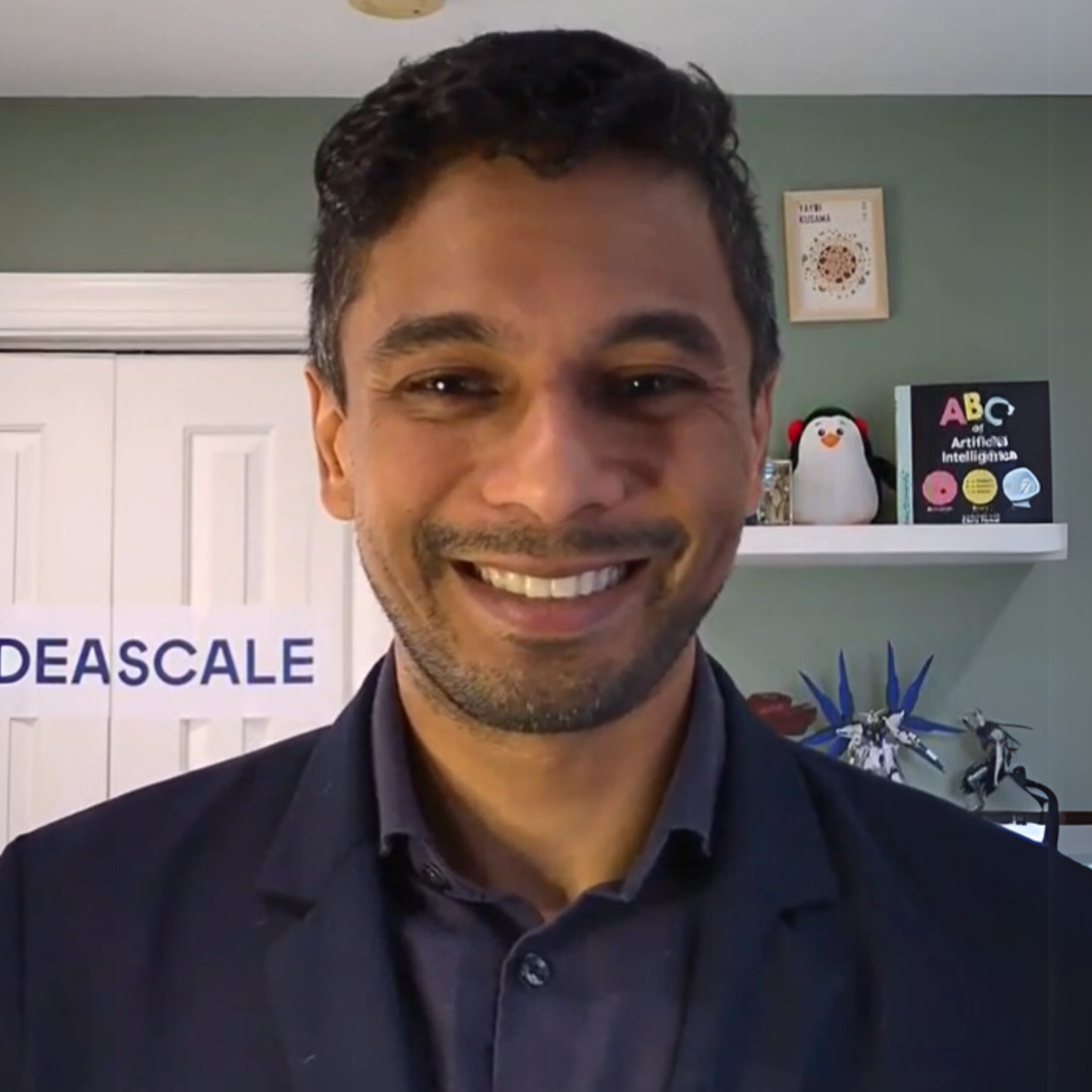
Summary: In this episode, Mitch Beinhacker interviews Nick Jain, a professional CEO with a diverse background in various industries including trucking and e-commerce. They discuss Nick's journey from Wall Street to becoming a CEO, the challenges of scaling organizations, and the intricacies of the trucking industry. Nick shares insights on the importance of governance and systems in scaling businesses, as well as his experience in the shoe rental market, which ultimately faced challenges due to market dynamics and consumer behavior. In this conversation, Nick Jain discusses the lessons learned from business failures, the inception and growth of Ideascale, and the importance of innovation in both private and public sectors. He emphasizes the need for organizations to foster creativity, provide incentives for innovation, and utilize effective software solutions to manage ideas. Jain also highlights Ideascale's commitment to supporting small businesses by offering free access to their platform, which helps organizations collect, evaluate, and implement ideas effectively. The discussion concludes with insights into upcoming features and the role of AI in enhancing the platform's capabilities.
Takeaways
Scaling requires good governance and HR policies.
Not all startups are ready to scale effectively.
A professional CEO can bring necessary skills to a company.
Trucking is a complex industry with many operational challenges.
The importance of a systematic pricing strategy in trucking.
E-commerce can be a viable entry point for technology-driven businesses.
Subscription models can be valuable but require careful analysis.
Understanding consumer behavior is crucial for business success.
Emotional decision-making can impact financial choices.
Analytics play a key role in inventory management for retail. Failure teaches us invaluable lessons.
Understanding unit economics is crucial for success.
Ideascale helps organizations innovate effectively.
Crowdsourcing ideas can lead to better solutions.
Security and control are essential for large organizations.
Incentives are necessary to encourage innovation.
Small teams can access Ideascale for free.
Implementation of ideas requires structured processes.
APIs enable seamless integration of software solutions.
Using existing software is often more efficient than building new.
Titles
Navigating the Entrepreneurial Landscape with Nick Jain
From Wall Street to Trucking: A CEO's Journey
Scaling Businesses: The Key to Sustainable Growth
The Challenges of the Trucking Industry Explained
Innovating in E-commerce: Lessons from the Shoe Business
Sound Bites
"I'm a professional CEO."
"You need backups in your organization."
"The business did fail ultimately."
"We learn 10 times more from failure."
"Get analytical on the unit economics."
"Crowdsourcing ideas is key."
"Security and control are crucial."
"You need incentives to innovate."
"Our software is free for small teams."
"We eat our own cooking."
"APIs have changed the world."
Chapters
00:00 Introduction and New Beginnings
04:08 Nick Jain's Professional Journey
05:44 The Importance of Scaling Organizations
08:17 Transitioning from Wall Street to Trucking
10:11 Challenges in the Trucking Industry
18:38 Exploring the Shoe Business
24:05 Lessons from the Shoe Rental Business
28:14 Learning from Failure
32:23 The Birth of Ideascale
34:46 Innovation in Government Organizations
40:51 Why Choose Ideascale?
43:54 Keys to Organizational Innovation
47:01 Free Access for Small Businesses
49:56 Implementation of Ideas
52:44 What's Next for Ideascale?

Mar 7, 2025
Mar 7, 2025
1hr 6 min
Keywords: real estate, passive income, entrepreneurship, music industry, investment strategies, financial freedom, wealth creation, education, market crash, property investment, real estate, creative financing, seller financing, entrepreneurship, investment strategies, property management, real estate investing, financial freedom, business challenges, real estate portfolio, real estate, property management, investment strategies, mindset, common mistakes, property valuation, contracts, learning, entrepreneurship
Summary: In this episode, Matt Theriault shares his journey from the music industry to real estate investing. He discusses the challenges he faced during the transition, the importance of passive income, and how he built a successful real estate business. Matt emphasizes the significance of education and community in achieving financial freedom, especially during market downturns. In this conversation, Matt Theriault shares his journey in real estate investing, focusing on creative acquisition strategies that allowed him to buy properties with little to no money down. He discusses the importance of seller financing and subject-to deals, the challenges of finding viable real estate deals, and the realities of entrepreneurship in the real estate sector. Matt also highlights his current portfolio and the transition to the notes business, emphasizing the need for a win-win mindset in real estate transactions. In this conversation, Matt Theriault shares his insights on long-term property ownership, effective property management, and the mindset shifts necessary for success in real estate investing. He discusses common mistakes made by new investors, the importance of understanding property valuation and contracts, and the learning experiences that come from real estate transactions. Theriault emphasizes the need for a solid foundation and realistic expectations in the journey of real estate investment.
Takeaways
Matt transitioned from the music industry to real estate after facing challenges.
He learned about passive income and its importance in wealth creation.
Matt's first property purchase was a pivotal moment in his investment journey.
He emphasizes the need for a mindset shift towards cash flow.
Education played a crucial role in Matt's success as a real estate investor.
He built a community to share knowledge and strategies in real estate.
Matt's experience during the market crash shaped his investment strategies.
He believes in finding ways to monetize skills and knowledge.
Matt's journey highlights the importance of resilience and adaptability.
He encourages others to pursue passive income as a primary goal. Matt filed for bankruptcy in 2001, making him unlendable.
Creative acquisition strategies involve dealing directly with distressed sellers.
The first deal made Matt $26,000, introducing him to creative real estate.
93% of real estate transactions involve agents; 7% are below market value.
Seller financing allows for flexible payment structures in real estate deals.
Finding a deal can be challenging; about 1 in 40 leads to a deal.
Entrepreneurship requires hard work and dedication, not just freedom.
Win-win doesn't mean equal; both parties can benefit differently.
Navigating real estate requires understanding seller motivations and distress.
Transitioning to the notes business can alleviate property management issues. My goal is to own forever.
We had to liquidate some assets for cash during COVID.
I don't have many tenancy issues due to good management.
It's easier to cash flow properties in the Midwest and South.
Joining masterminds is a great way to network and learn.
Quitting your job too soon can hinder your real estate success.
Real estate has produced more wealth than any other investment.
Many people go broke on marketing too quickly.
Understanding contracts is crucial in real estate transactions.
Learning from each transaction is key to becoming comfortable in real estate.
Chapters
00:00 Introduction and Guest Introduction
03:40 Matt's Journey from Music to Real Estate
09:03 Transitioning to Real Estate and Early Challenges
12:39 The Real Estate Revelation and Passive Income
16:24 First Property Purchase and Investment Mindset
18:27 Building a Community and Teaching Real Estate
20:40 Navigating the Real Estate Market Crash
22:27 Creative Real Estate Acquisition Strategies
27:42 Understanding Seller Financing and Subject-To Deals
30:11 The Reality of Finding Real Estate Deals
36:50 Navigating the Challenges of Real Estate Investing
41:23 Current Portfolio and Transition to Notes Business
45:03 Navigating Property Management Challenges
48:58 Common Mistakes in Real Estate Investing
52:02 Understanding Property Valuation and Contracts
57:02 Learning from Real Estate Transactions

Feb 28, 2025
Feb 28, 2025
1hr 17 min
Keywords: Kirk Mauriello, restaurant industry, franchising, virtual brands, business management, marketing strategies, quality control, profitability, entrepreneurship, food industry, restaurant operations, customer satisfaction, virtual restaurants, licensing model, franchising, profit margins, pricing strategies, restaurant partnerships, business models, food delivery, restaurant business, delivery model, virtual brands, customer engagement, food industry, business growth, partnership model, 24-hour diners, brand promotion, operational insights
Summary: In this episode, Mitch Beinhaker interviews Kirk Mauriello, who shares his unique journey from the electrical supply industry to becoming a successful entrepreneur in the restaurant sector. Kirk discusses his experiences in franchising, the importance of standardization and quality control, and innovative marketing strategies that significantly improved profitability for franchisees. He emphasizes the need for effective systems and processes in franchising to ensure success and build trust with franchisees. In this conversation, Kirk Mauriello discusses his extensive experience in the restaurant industry, focusing on the transformation of customer satisfaction through improved operations and the shift towards virtual restaurant models. He emphasizes the importance of licensing over franchising, innovative business strategies, and the significance of understanding profit margins and pricing strategies. Kirk also reflects on the lessons learned from mistakes made in restaurant partnerships, highlighting the need for careful vetting processes. In this conversation, Kirk Mauriello discusses the evolution of the restaurant business, particularly focusing on the partnership model with virtual brands and the impact of delivery services. He highlights the importance of customer engagement, the role of delivery drivers in promoting restaurants, and operational insights that can lead to business growth. The discussion emphasizes the need for restaurants to adapt to changing consumer behaviors and the benefits of collaboration in the food industry.
Takeaways
Kirk transitioned from electrical supply to the food industry.
He became the COO of a restaurant chain in Chicago.
Kirk learned about virtual brands and their marketing.
He implemented innovative systems in franchising.
Standardization reduced complaints significantly.
Kirk emphasized the importance of pricing strategies.
He used data to improve profitability for franchisees.
Marketing efforts focused on peak sales days.
Quality control was essential for franchise consistency.
Kirk believes in clear communication and detailed processes. Customer satisfaction can be significantly improved through operational changes.
Transitioning from traditional to virtual restaurant models can be seamless with the right experience.
Licensing models offer more autonomy to restaurants compared to franchising.
Understanding the difference between corporate chains and franchises is crucial for business owners.
Mistakes in changing restaurant concepts too quickly can lead to loss of customer base.
Virtual brands can expand a restaurant's market reach beyond walk-in customers.
Effective marketing and brand differentiation are key to success in the online food delivery space.
Profit margins can vary significantly based on location and pricing strategies.
The consumer's perception of value is often based on price in the online marketplace.
Learning from past mistakes is essential for future success in restaurant partnerships. 24-hour diners have decreased significantly since COVID.
Restaurant owners often need convincing to adopt new models.
Successful partnerships can lead to significant revenue increases.
Customization of menus is essential for restaurant operations.
Delivery drivers can inadvertently promote restaurants to local customers.
Repeat orders are crucial for sustaining virtual brands.
Effective marketing strategies can enhance brand visibility.
Building relationships with delivery drivers can boost business.
Operational efficiency is key to maximizing profits.
Understanding customer expectations is vital for success.
Titles
From Electrical Supply to Restaurant Success
Innovating Franchising: Kirk Mauriello's Journey
Mastering Virtual Brands in the Food Industry
The Importance of Standardization in Franchising
Marketing Strategies for Restaurant Profitability
Transforming Restaurant Operations for Customer Satisfaction
The Shift to Virtual Restaurants: A New Era
Sound Bites
"I learned how to do virtual brands."
"You can't just double your hourly rate."
"We had no item 19."
"People eat with their eyes."
"You have to spell everything out."
"customer satisfaction was way up."
"we built that into a franchise system."
"I made some mistakes there."
"I can build this model better."
"you're missing out on so much of the market."
"we guarantee our restaurants 30% of the sale."
"Doesn't cost me anything to be part of this."
"We give standards for the food quality."
"You never know who it's gonna be."
"You can never see enough customers."
Chapters
00:00 Introduction to Kirk Mauriello and His Journey
05:58 Transitioning from Electrical Supply to the Food Industry
11:04 Innovations in Franchise Management
17:02 Marketing Strategies and Sales Cycles
24:00 Standardization and Quality Control in Franchising
25:14 Transforming Customer Experience in Restaurant Operations
29:50 Navigating the Shift to Virtual Restaurant Models
34:03 The Rise of Licensing Over Franchising
39:29 Innovative Business Models in the Restaurant Industry
43:08 Understanding Profit Margins and Pricing Strategies
49:55 Learning from Mistakes in Restaurant Partnerships
50:15 The Evolution of 24-Hour Diners
55:02 The Restaurant Partnership Model
59:53 Brand Promotion and Customer Engagement
01:04:56 The Impact of Delivery Drivers on Restaurant Business
01:10:01 Operational Insights and Business Growth